
Comfort & Sedation
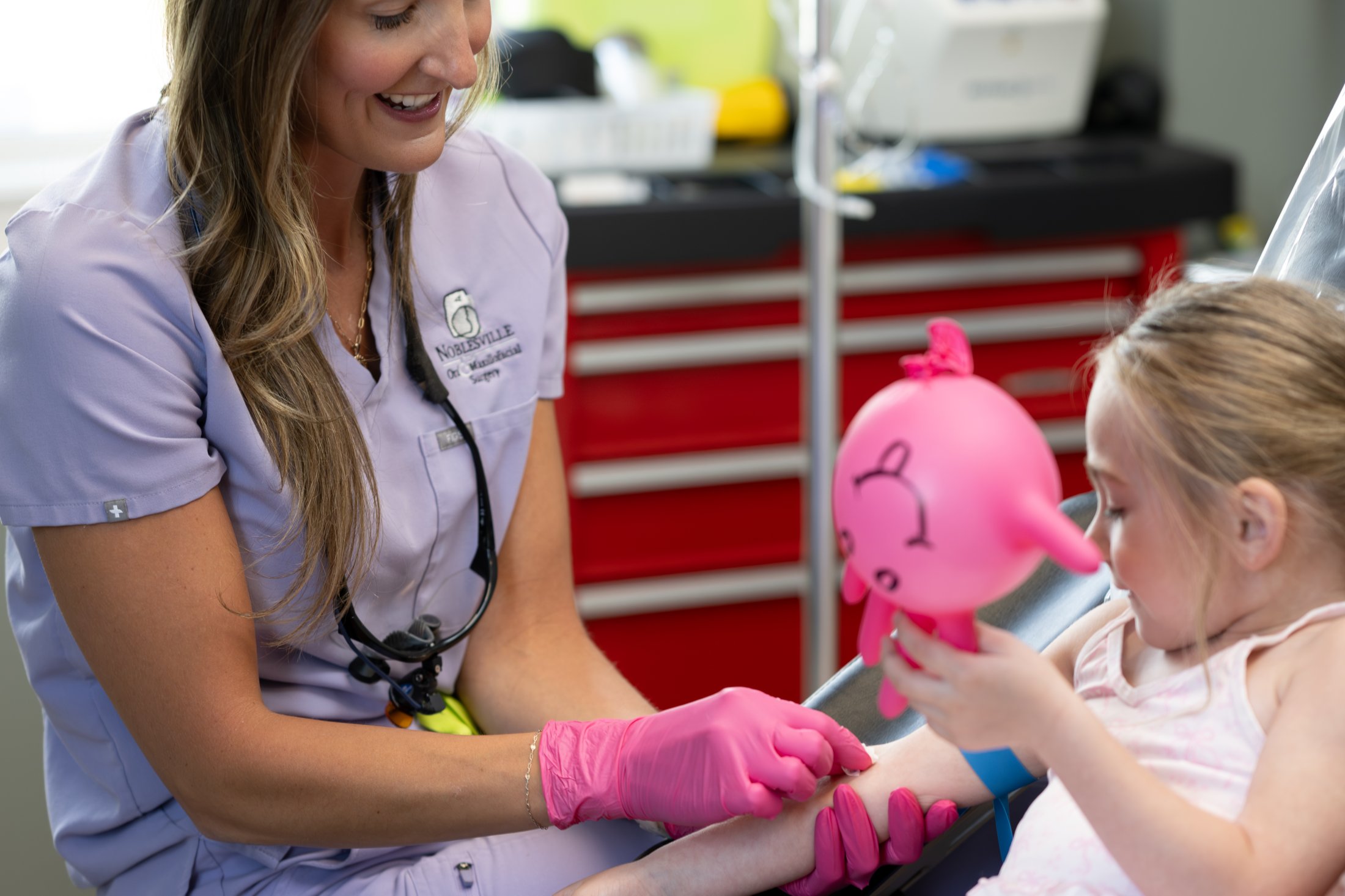
Feeling nervous about oral surgery is completely normal.
Whether you have mild anxiety or would simply prefer not to remember your procedure, we offer several anesthesia and sedation options designed to make your experience as comfortable as possible.
Your comfort is part of your care.
Sedation Tailored to You
There isn’t one right anesthesia option for every patient or every procedure.
Your surgeon will consider your procedure, health history, age, anxiety level, and personal preferences when recommending the safest and most appropriate option for you.
Anesthesia & Sedation Options
Local Anesthesia
Local anesthetic thoroughly numbs the surgical area while you remain awake. This may be appropriate for many straightforward procedures.
Nitrous Oxide
Often called “laughing gas,” nitrous oxide can help reduce anxiety while allowing you to remain awake and responsive.
Oral Sedation
Oral sedation involves taking a prescribed medication before your procedure to help reduce anxiety and promote relaxation. You’ll remain conscious but may feel drowsy and more at ease. Because the medication can affect alertness and coordination, you’ll need a responsible adult to drive you home and stay with you after your procedure.
IV Sedation
Medication is administered through an IV to create a deeply relaxed, sleep-like state. Many patients have little or no memory of their procedure.
IV sedation is commonly used for procedures such as wisdom tooth removal and may also be an option for other surgical treatments.
Your Safety Comes First
Oral and maxillofacial surgeons receive extensive hospital-based anesthesia training as part of their surgical residency.
During IV sedation, your vital signs are continuously monitored throughout your procedure, and our surgical team is trained to safely administer anesthesia and respond to emergencies.
Before your procedure, we’ll review your medical history and medications and provide specific instructions for eating, drinking, medications, transportation, and recovery.
Nervous About Oral Surgery?
Please tell us.
We want to know what you’re worried about so we can answer your questions, discuss your options, and make your experience feel a little less intimidating.
Have Questions About Sedation?
Contact our office to learn more about your anesthesia options and what may be appropriate for your procedure.